


47 years ago, on Aug 13th, 1979, BusinessWeek unveiled one of the most iconic, fear-mongering, boldest predictions ever to grace a magazine cover.
Investors bought the narrative hook, line, and sinker -
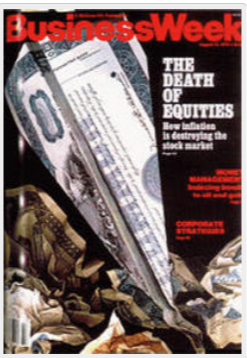
Business Week fully understands the game – Fear sells. They also understood that it was the perfect time to play that headline.
Investors had grown tired and weary of investing as they battled a decade worth of stagflation where equities had barely moved. Pessimism about owning American companies in one’s portfolio had grown steadily in the years preceding this iconic cover.
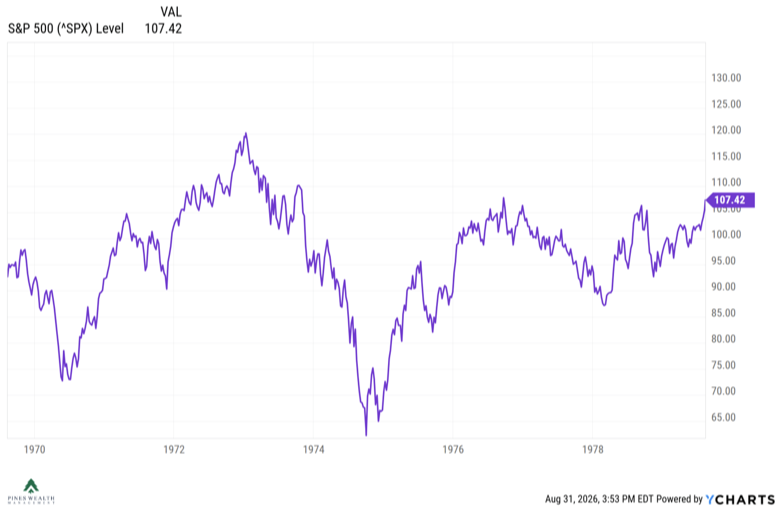
That day, when this article was published, the S&P 500 sat at 107.
And you, my dear reader, know exactly where I’m going with this – So, what has happened with equities since this article was published?
Well, I’m sure you’re familiar with how this played out.
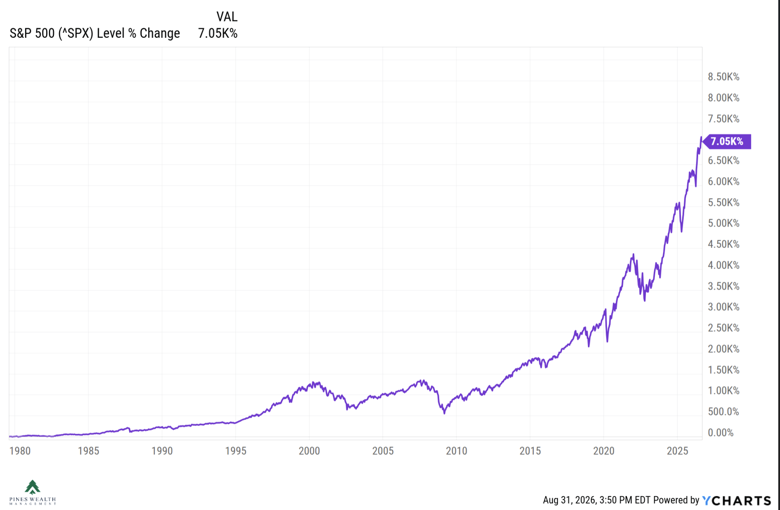
It’s been an epic bloodbath for Business Week ever since their “death of equities” magazine cover.
It’s an anniversary that Business Week would rather you forget.
And yet, the fear-bullying has continued unabated. Despite being proven wrong time and time again, they always turn back to their dark twin masters – fear and panic.
In part because they know that investors are all too eager to buy into that fear and panic. It’s a vicious cycle that never ends.
I mean just look at today’s news cycle – the political infighting, social anxieties, economic policies – they all lend themselves to fear and panic.
Case in point - here’s a prime example of the mainstream media playing into your fear and panic; just look at these recent headlines:

A reasonable person would think that, based on how these headlines read, credit card debt is going to sink the economy.
Well, once again, the mainstream media fails to look at the entire picture.
Consumer net worth has been on a rocket ship since the start of the decade, expanding from roughly $109 trillion to $174 trillion[1]. Where is that mentioned in any of these articles . . . oh yeah, it’s not!
On the other side of the consumer balance sheet, liabilities have expanded (yes, the media got that part right), from about $14 trillion at the end of 2019 to $19 trillion, with housing debt making up roughly $4 trillion of that growth[2].
However, what’s conveniently left out is that household assets have expanded by roughly $70 trillion while liabilities have expanded by just $5 trillion. This means that asset growth has outpaced liabilities by 14 times (yes, I wrote that number correctly).
Stories of credit card debt reaching new levels drive better ad sales, yet these articles don’t tell the full story. While credit card debt just crossed the $1.25 trillion mark, up from around $930 billion at the start of the decade[3], it’s a drop in the bucket compared to total assets owned by households (again, good luck in finding that mentioned anywhere).
As I’ve always said, it’s not about the AMOUNT of debt that’s carried; it’s the ability to service the debt – and household debt service payments (including credit cards) represent about 11% of disposable income.
And that figure hasn’t moved much in the last 46 years -
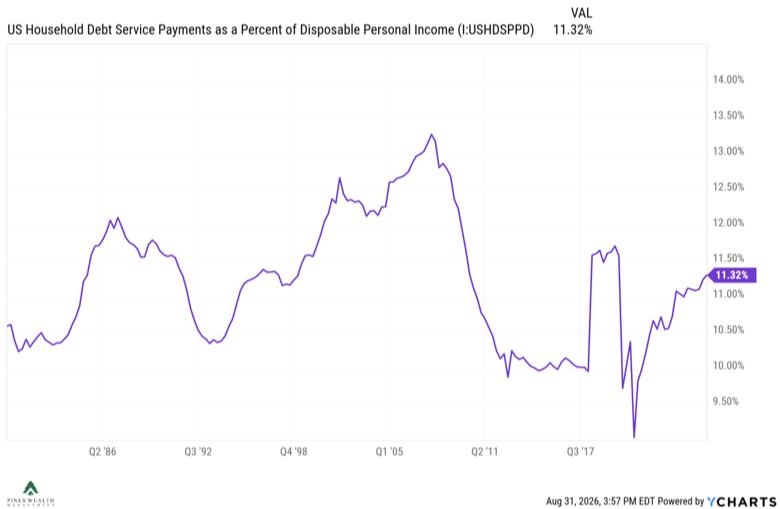
Of course, don’t expect the mainstream media to report on that, much less to dig any further.
When debt is charted against the backdrop of household wealth, an entirely different picture emerges on the so-called “consumer credit crisis” –
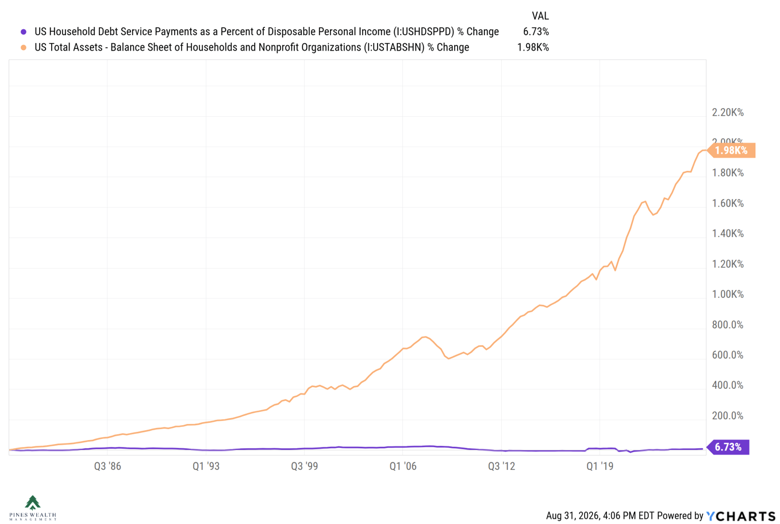
Household assets have exploded over the last 50 years, while the amount of income required to service household debt has remained relatively flat.
Good luck finding that chart anywhere in the media.
Credit card debt is simply another tool in their fear toolbox. It all comes from the same playbook: “this time is different.”
Can we finally agree that the “this time is different” playbook is worn out?
So, the next time the financial media rolls out the fear wagon, feel free to pull out this little gem of a magazine cover.
You’ll send them shamefully checking their shoeshine to that dark little corner where the chair of humiliation waits for them to sit.
Stay the course, my friends.
[1]Consumer Net Worth – St. Louis Fed
[2]Household Debt – New York Fed
[3]Credit Card Debt – New York Fed (See Non-Housing Debt Balance detail page)